
Building a purpose-built chain for real-world assets with Plume
In just over 6 months, Plume had the most RWA holders of any chain.

In just over 6 months, Plume has the most RWA holders of any chain
Plume built a purpose-built, EVM-compatible chain for RWAfi, designed to make real assets programmable from day one. Since launching mainnet, Plume has scaled from an early RWA ecosystem into the largest holder base in crypto, growing to over 280,000 holders. At peak load, the chain has handled surges that pushed it past Base on TPS, while maintaining predictable finality and stable latency.
Conduit partnered with Plume as the single-operator infrastructure layer and embedded protocol engineering team, helping Plume move from a fragile testnet setup to a production-grade chain with sequencer, RPC, account abstraction, and compliance-ready controls built in.
Keep reading to see how Plume and Conduit designed the chain architecture, enforced compliance in-path, and proved performance under load during production traffic spikes.
The Status Quo of RWAs
Real-world assets on blockchains are no longer experimental. Tokenization is now on the agenda of mainstream finance, with parallel pushes both from Web2 institutions and Web3 builders.
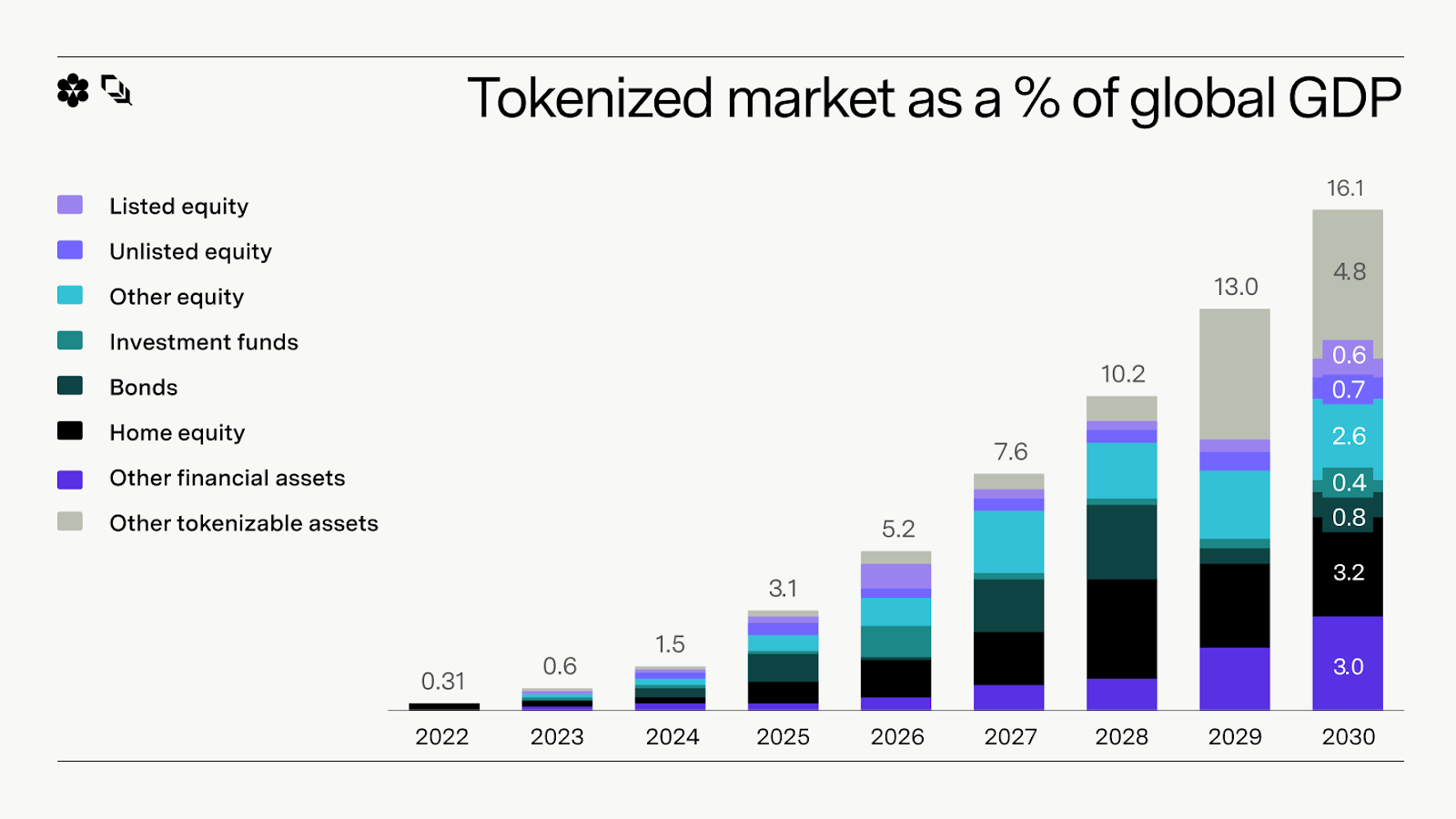
One widely cited estimate from BCG x ADDX projects tokenized assets growing from roughly $0.3T to ~$16.1T by 2030, roughly 10% of global GDP. But not all tokenization is created equal.
Plume at a Glance
Plume is a full-stack, modular, EVM-compatible chain for RWAfi. It ships the components institutions need to issue and use real assets onchain:
- Tokenization engine to model and mint any asset
- A specialized RWA wallet and transfer controls
- Native RWA yield and collateralization
- Ecosystem of RWAfi apps and liquidity venues
More than 200 RWA projects are building on Plume, using a composable environment that pairs an end-to-end tokenization flow with a network of financial infrastructure partners. The aim is simple: make onboarding, distribution, and DeFi integration of RWAs straightforward.
The Institutional Barriers to Entry
Institutions have been held back by 3 major barriers: Distribution, compliance, and scalability.
Plume tackles all three with issuer-grade controls, a DeFi-first design, and throughput sized for real-world volumes. Bringing RWAs onchain also demands safe deployment, high throughput, and continuous operations.
Plume partnered with Conduit for a single-operator infrastructure layer and embedded protocol engineers, combining a verticalized launch platform with hands-on integration of core chain components, compliance features, and day-one app partners, which removed multi-vendor stitching, accelerated time to mainnet, and delivered production-grade performance at a sustainable cost.
The result is a high-performance RWA chain with predictable finality, fast exits, and a reusable foundation for issuers and developers.
Plume’s Architecture Snapshot
Plume came to Conduit after encountering performance and reliability issues with their previous provider that made it hard to operate with confidence under real usage. After running rigorous benchmarks with their engineering team, they decided to switch to Conduit based on measurable better infrastructure behavior under load and the operational model behind it.
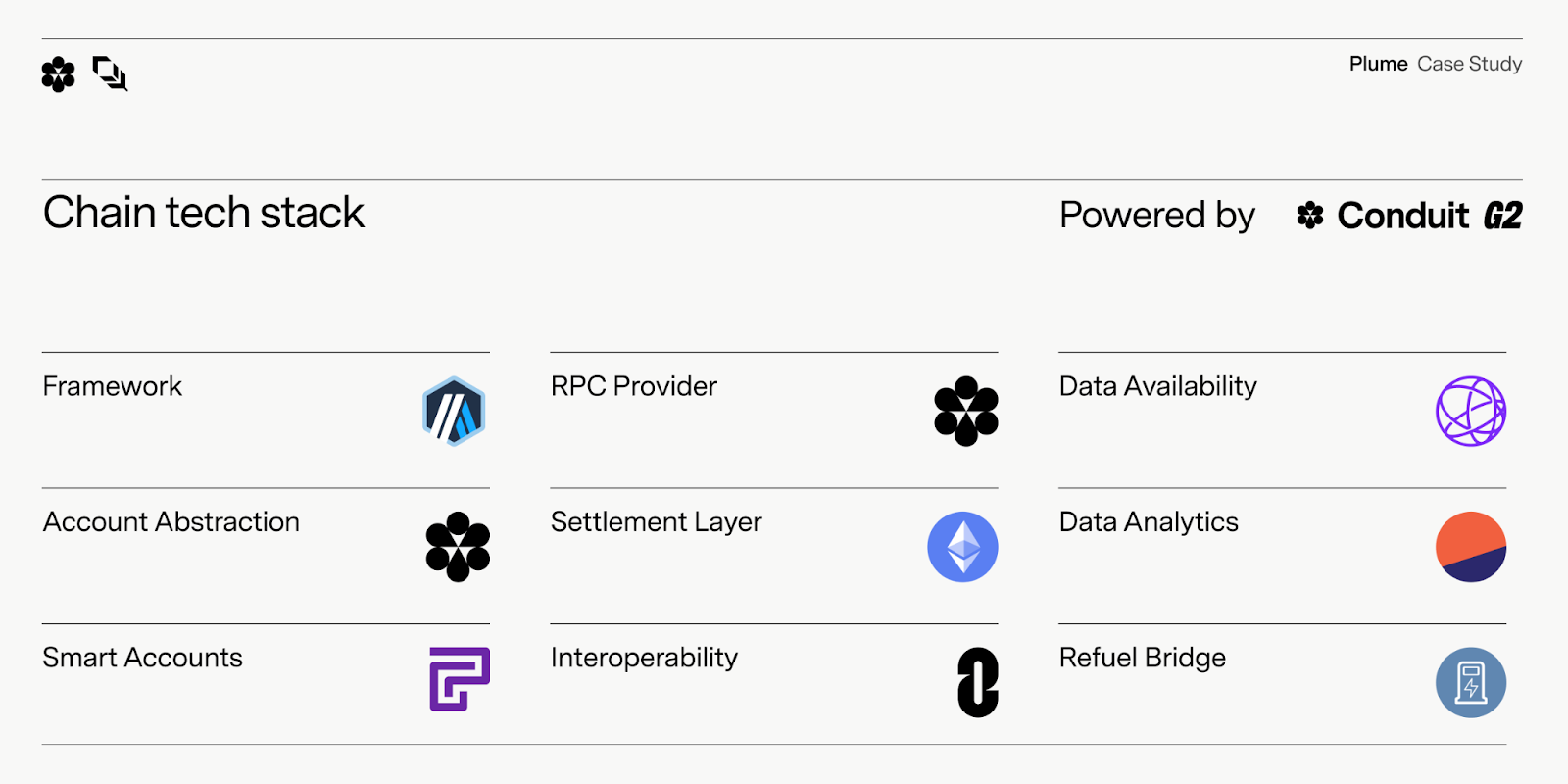
Once engaged, we worked closely with Plume to design a chain stack that matched their requirements and growth plan. They needed fast block times and consistently cheap transactions, which made an Arbitrum-based chain with Celestia for blockspace a natural fit for their throughput and cost targets. This stack choice also gave them a clean separation of concerns, with execution optimized for EVM compatibility and user experience, and data availability optimized for scalable, cost-efficient posting.
Plume also benefited from vendor consolidation. Instead of stitching together multiple providers across critical infrastructure, they standardized on Conduit for core services like RPC and Account Abstraction. That meant fewer integration points, faster iteration when new ecosystem requirements emerged, and a simpler operational path when traffic spiked or new partners needed support. The result was a more cohesive foundation to scale Plume’s ecosystem while keeping performance and reliability aligned with the expectations of RWA use cases.
Beyond the core chain architecture, Plume integrated a broader set of infrastructure partners to complete the stack. LayerZero provided cross-chain interoperability, Dune delivered analytics and ecosystem visibility, Pimlico supported smart account functionality, and gas.zip improved refueling and cross-chain user flows. Together, these services helped turn the chain into a more complete operating environment for issuers, apps, and users.
Conduit G2 Sequencer
Bringing the real world onchain requires huge throughput. Plume came to us last year when scaling barriers on its existing testnet on another provider made that throughput unattainable.
Plume has blown past those barriers with G2, hitting 128 MGas/s in load tests during its testnet phase.
Compliance-Ready
At the center of Plume’s compliance stack is the Conduit G2 sequencer. It serves as the control point for what is allowed to proceed to execution. At ingress, the Conduit RPC applies core compliance checks, including baseline sanctions enforcement. Forta Firewall adds an extra layer of coverage with broader watchlists, fraud signals, and transaction-level risk analysis. G2 consumes that decision and enforces policy at ordering time, so only approved flow is sequenced and written to chain.
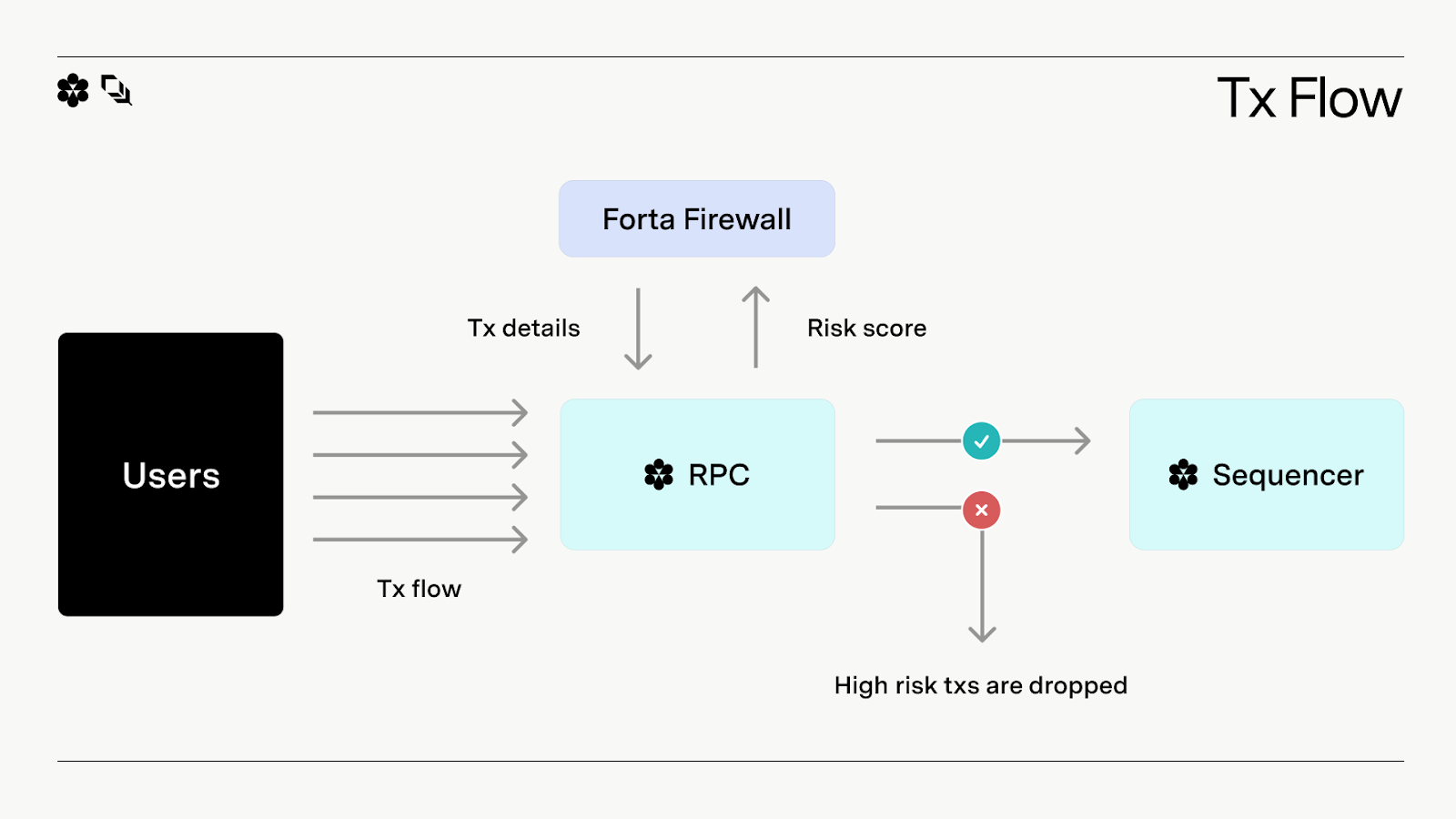
As part of Plume’s AML program, addresses implicated in a call are screened against the U.S. Treasury’s Office of Foreign Assets Control (OFAC) sanctions data, including the Specially Designated Nationals (SDN) list. If there is a sanctions match, the RPC reports a block and G2 prevents the transaction from entering the ledger. This keeps prohibited activity offchain and creates a native, reviewable audit trail anchored at the sequencer.
Controls are layered so compliance travels with the asset. G2 policy hooks work alongside asset-level rules such as ERC-3643, which enforce identity, jurisdiction, and transfer restrictions while preserving EVM composability. Screening runs within normal RPC expectations, and G2 maintains predictable ordering and finality under load.
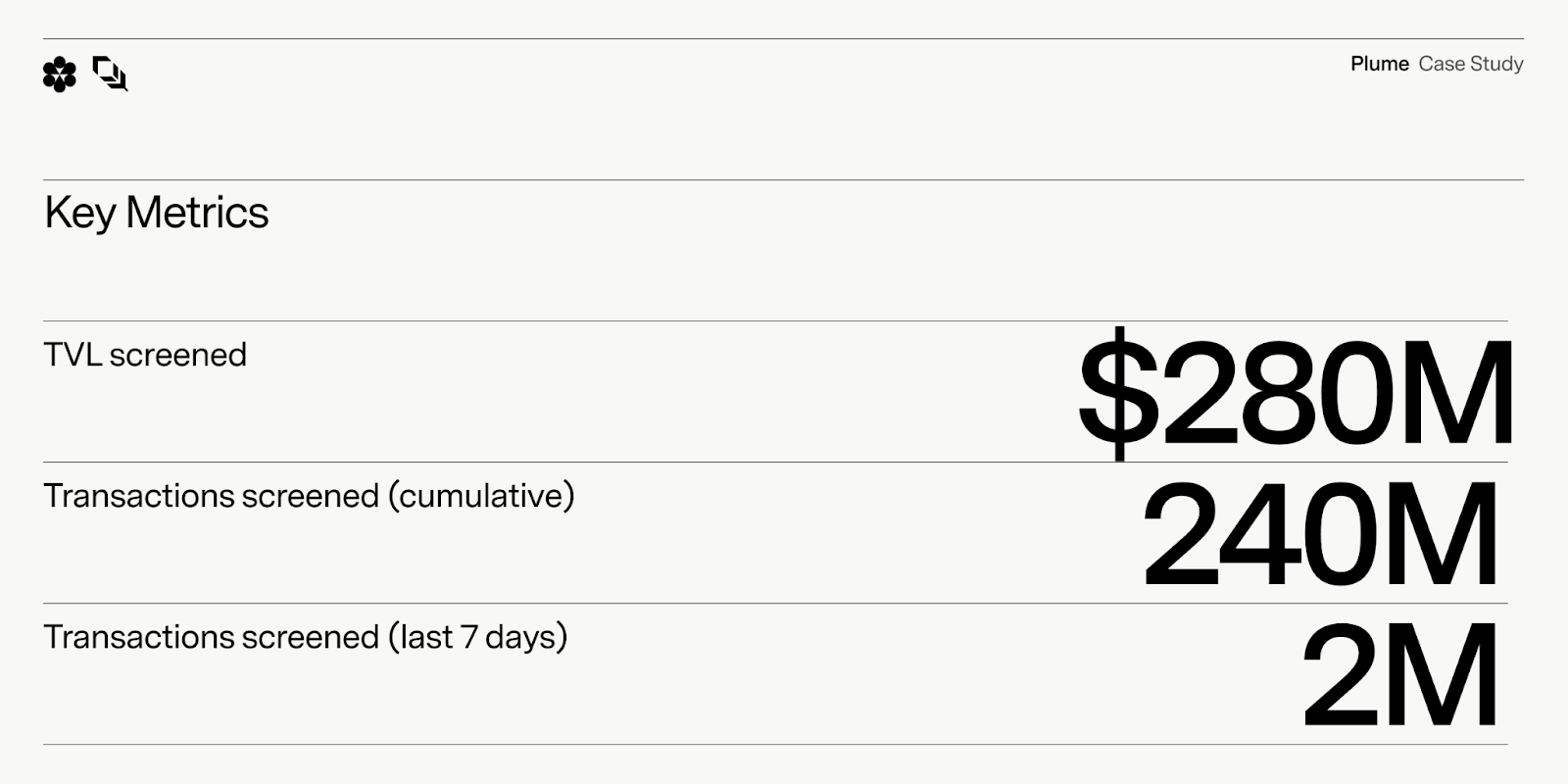
Key metrics
Asset-level compliance (ERC-3643)
On Plume, ERC-3643-style controls are embedded at the token. Each transfer checks the essentials first: KYC or AML status, jurisdiction, investor accreditation, and any lockups tied to the wallet’s onchain identity. With rules at the asset layer, issuers can enforce geo-fences, per-investor limits, and corporate actions such as forced transfers or redemptions, while keeping EVM composability intact. In the U.S., a Reg A+ path can expand distribution within defined limits and disclosures, with on-chain registries mirroring transfer-agent duties. Withholding and tax logic can reference investor claims so payouts align with real-world obligations. The result is an auditable securities lifecycle with significant servicing efficiency gains and clearer market signals about risk and value on Plume.
Battle-tested in production
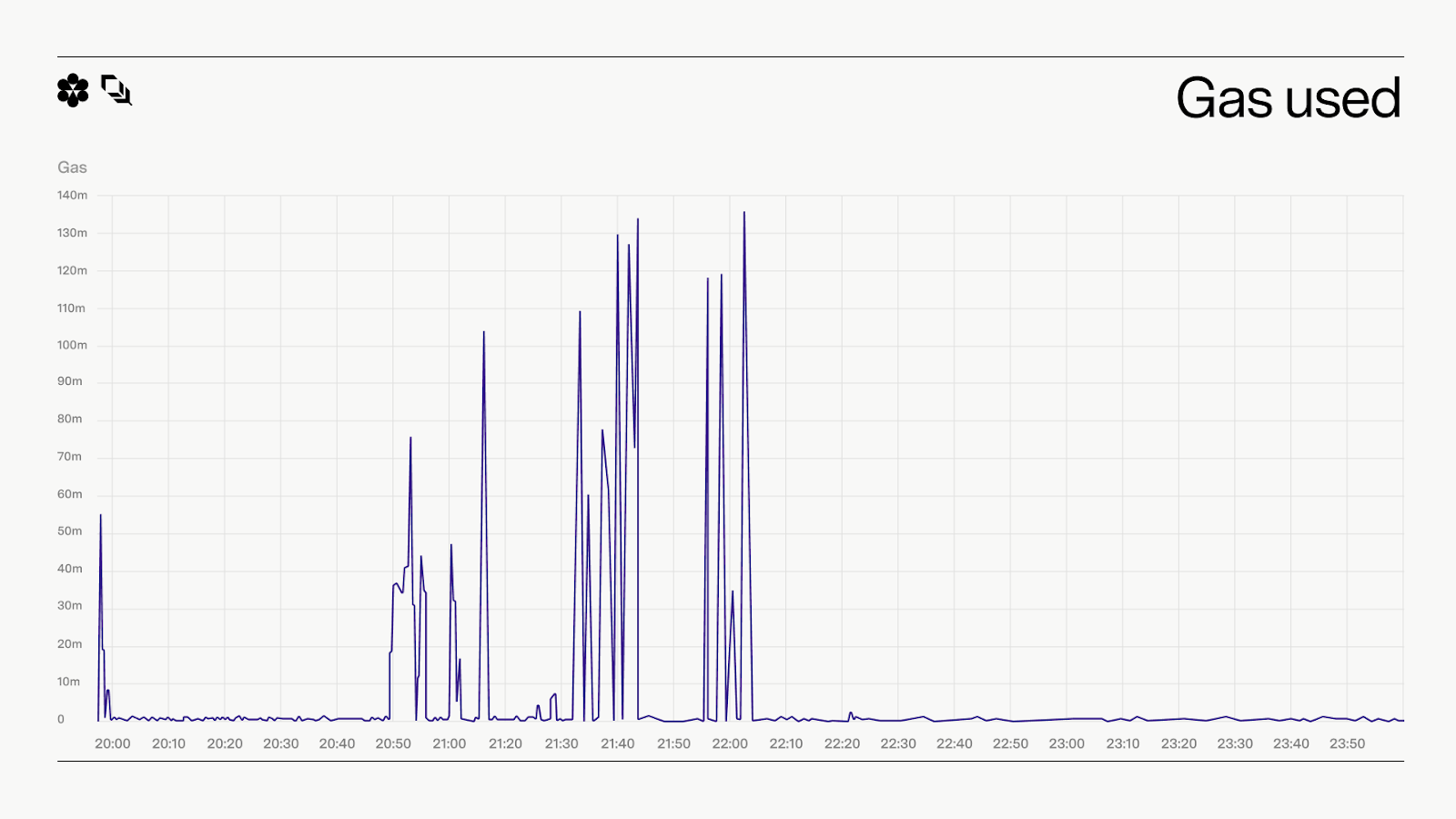
Since mainnet launch on June 5, 2025, Plume’s resilience has been proven in the wild. A clear example came on July 30, when the rewards campaign with Morpho Labs and OKX Smart Wallet went live and users rushed to claim earnings.
LIVE: Plume x @MorphoLabs x @wallet
— Plume (@plumenetwork) July 30, 2025
🫰 Simply supply $pUSD to Re7 pUSD Morpho Vault via the OKX wallet to earn!
📅 Ends: August 29th, 2025
👀 Merkl rewards stack too
PS. MEV pUSD Morpho Vault coming soon https://t.co/7GdRfYTmiH
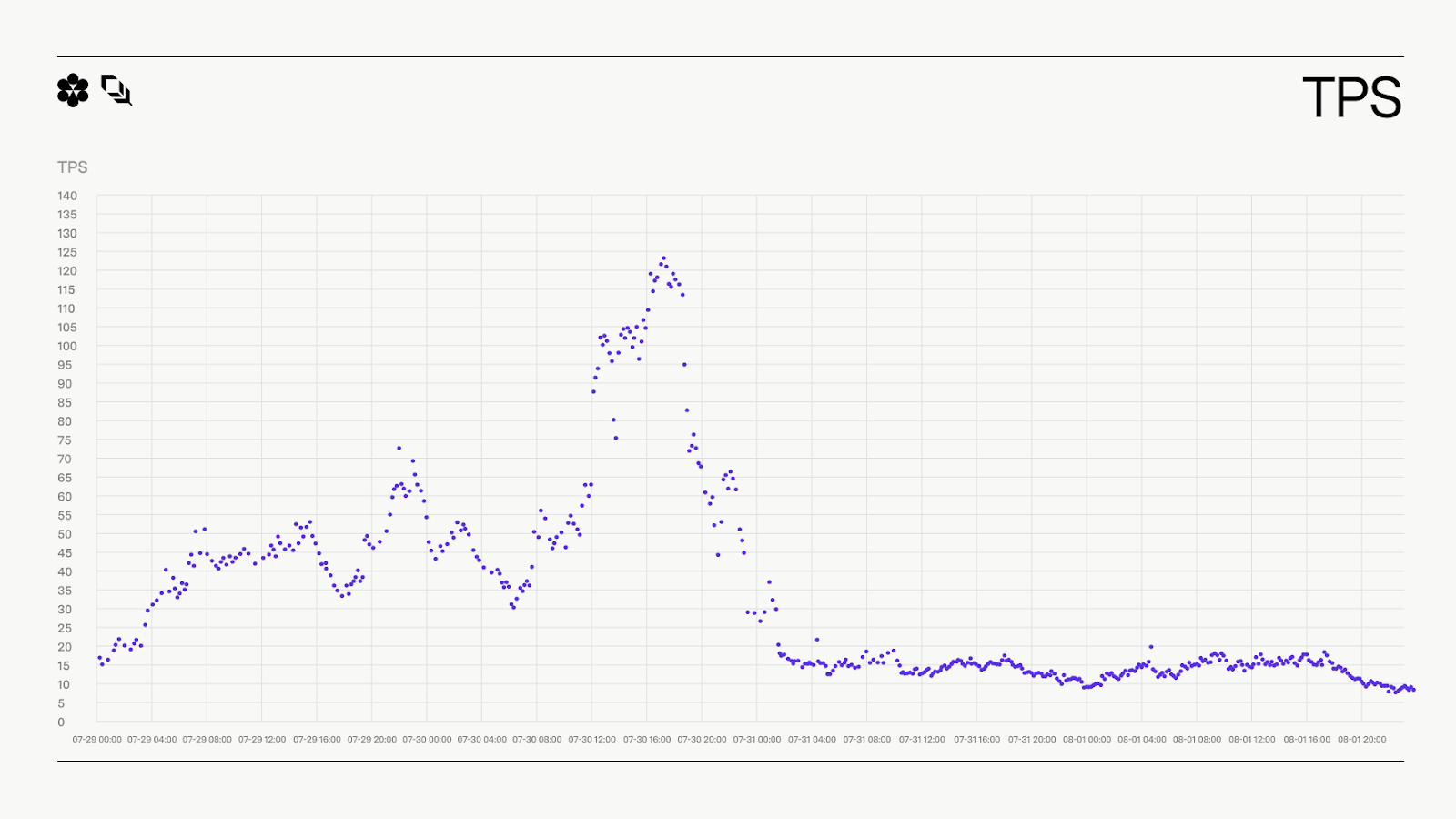
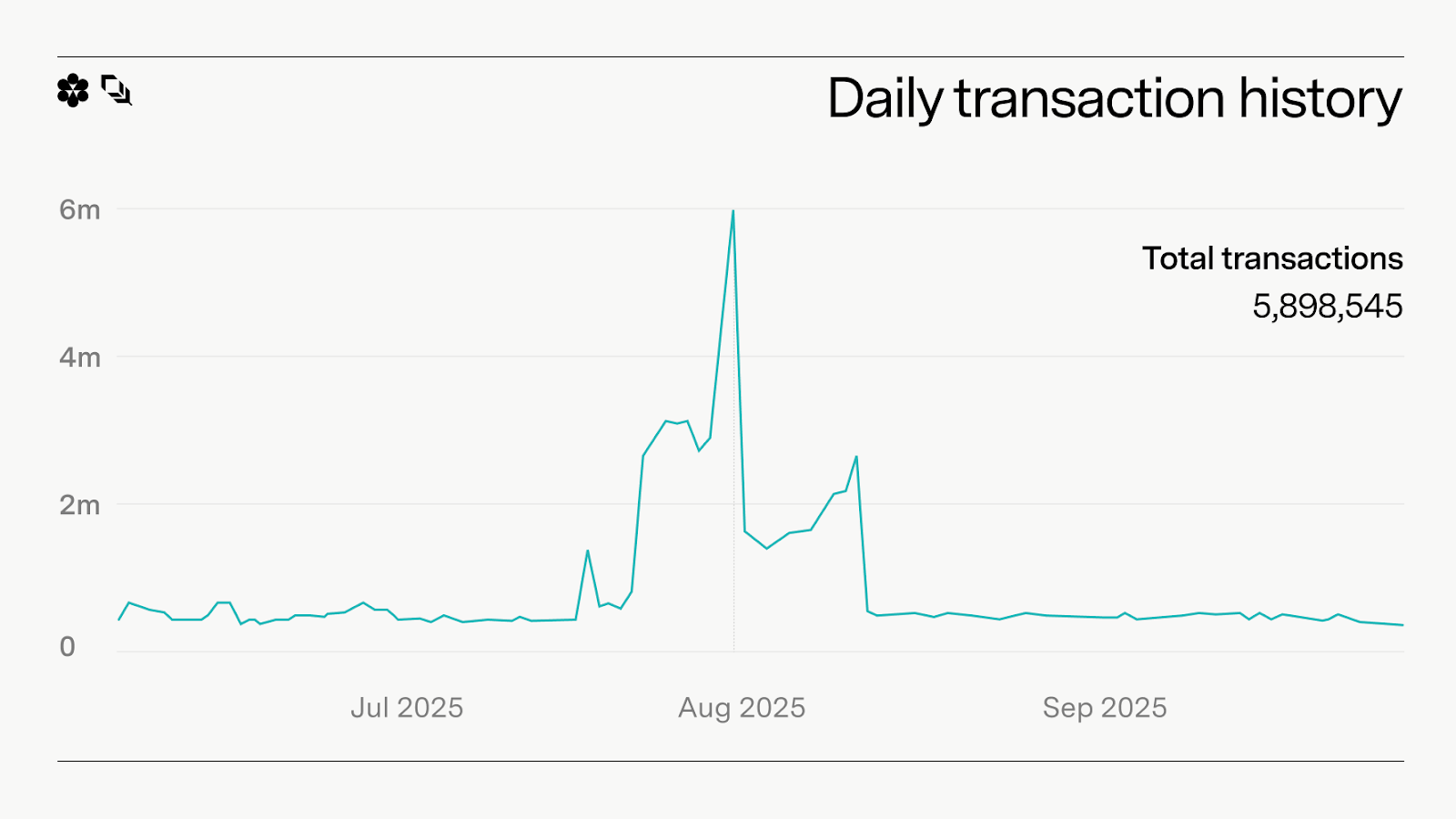
The surge drove a major traffic spike across the network; during that window Plume surpassed Base on TPS, one of the top of Ethereum L2s by TVL and user activity.
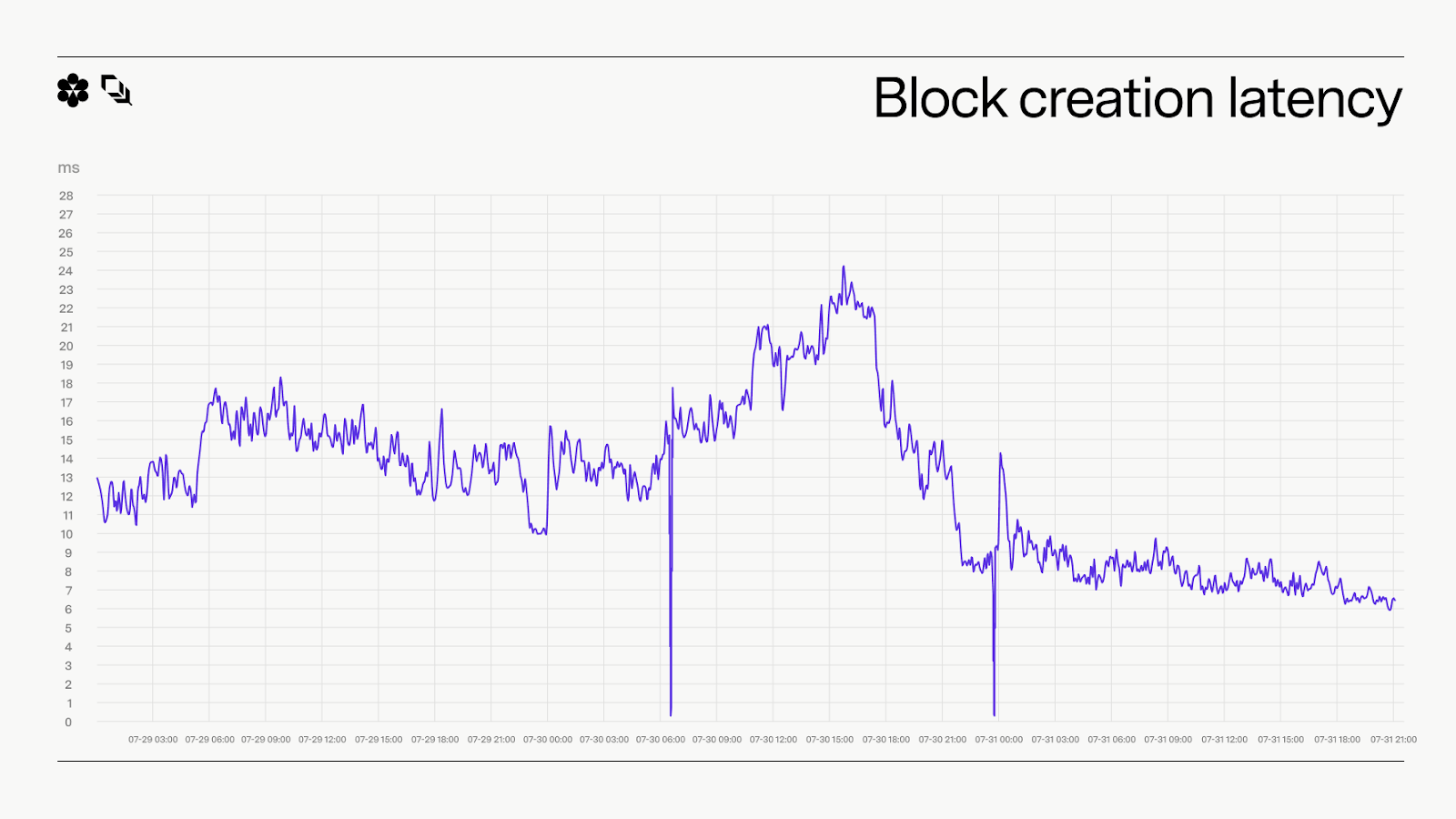
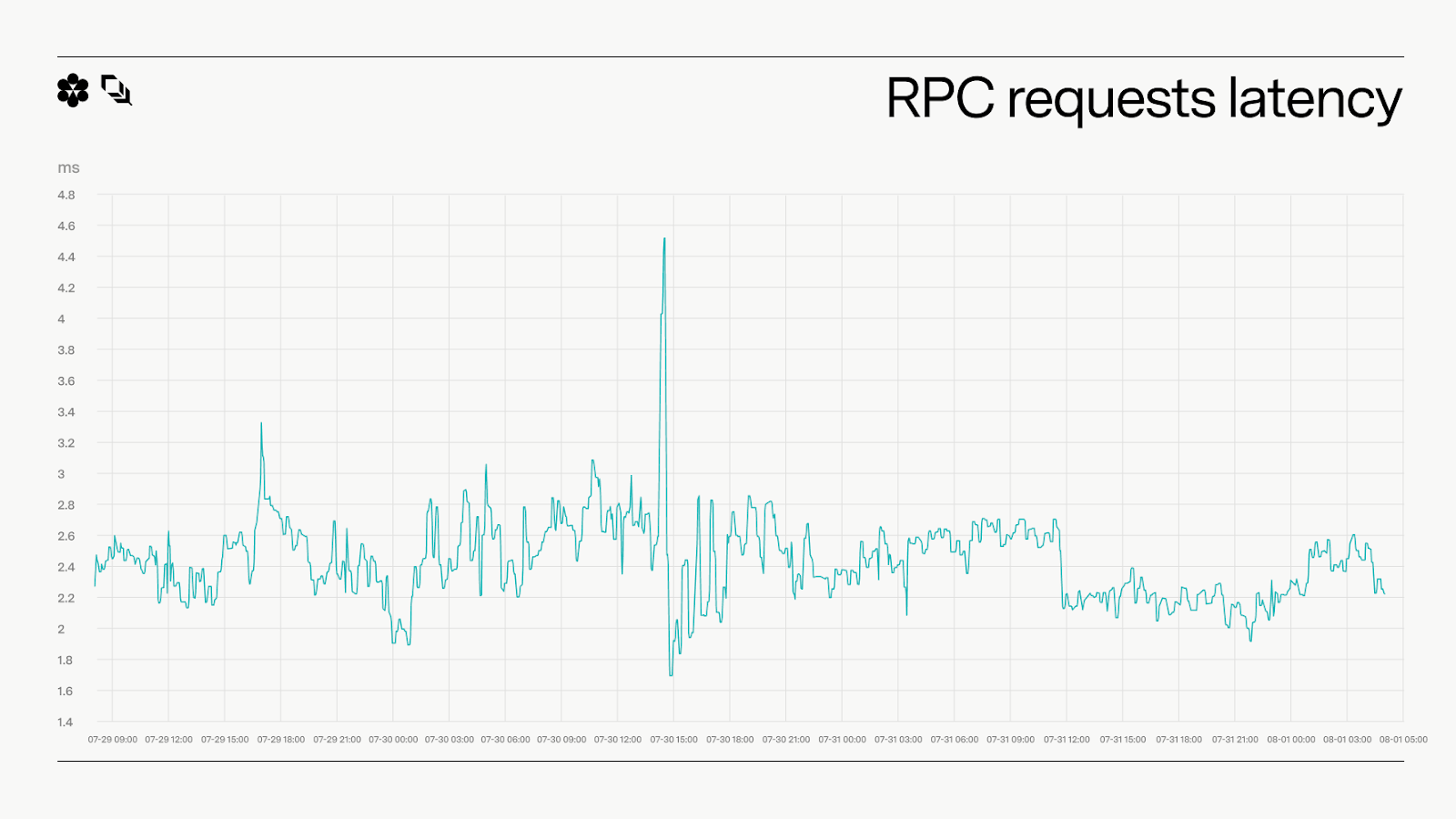
Meanwhile, the G2 sequencer ran smoothly throughout the spike - median block creation latency (p50) held at ~17 ms across the entire window, showcasing predictable block production even under peak load.
Over a 24-hour stretch, the network processed close to 6 million transactions while maintaining smooth execution.
On the app side, Conduit RPCs helped teams keep low-latency performance at that throughput, providing a web-like UX.
Median RPC request latency (p50) also stayed essentially flat through the spike, showing that the read path scaled with demand without introducing sustained latency regressions.
Conduit Account Abstraction ensured a clean, intuitive UX for end users by abstracting away gas, keys, and transaction complexity - the main friction points that break onboarding for non-crypto-native users. That combination of scale, stability, and usability is exactly what’s needed to bring real-world assets onchain at volume.
Plume’s growth since Mainnet
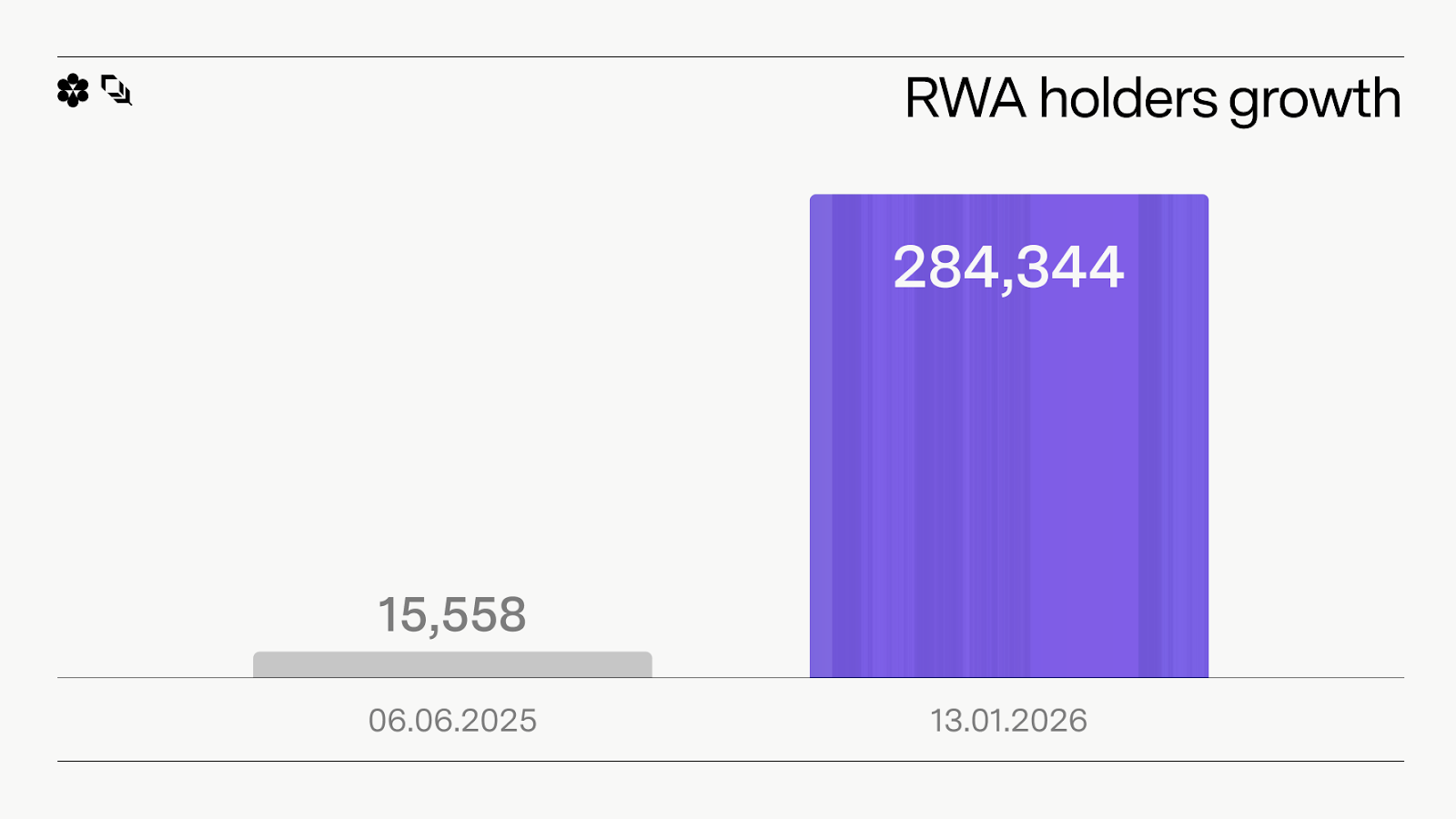
Since launch, the number of RWA holders rose from 15,558 in June to over 280,000 by November.
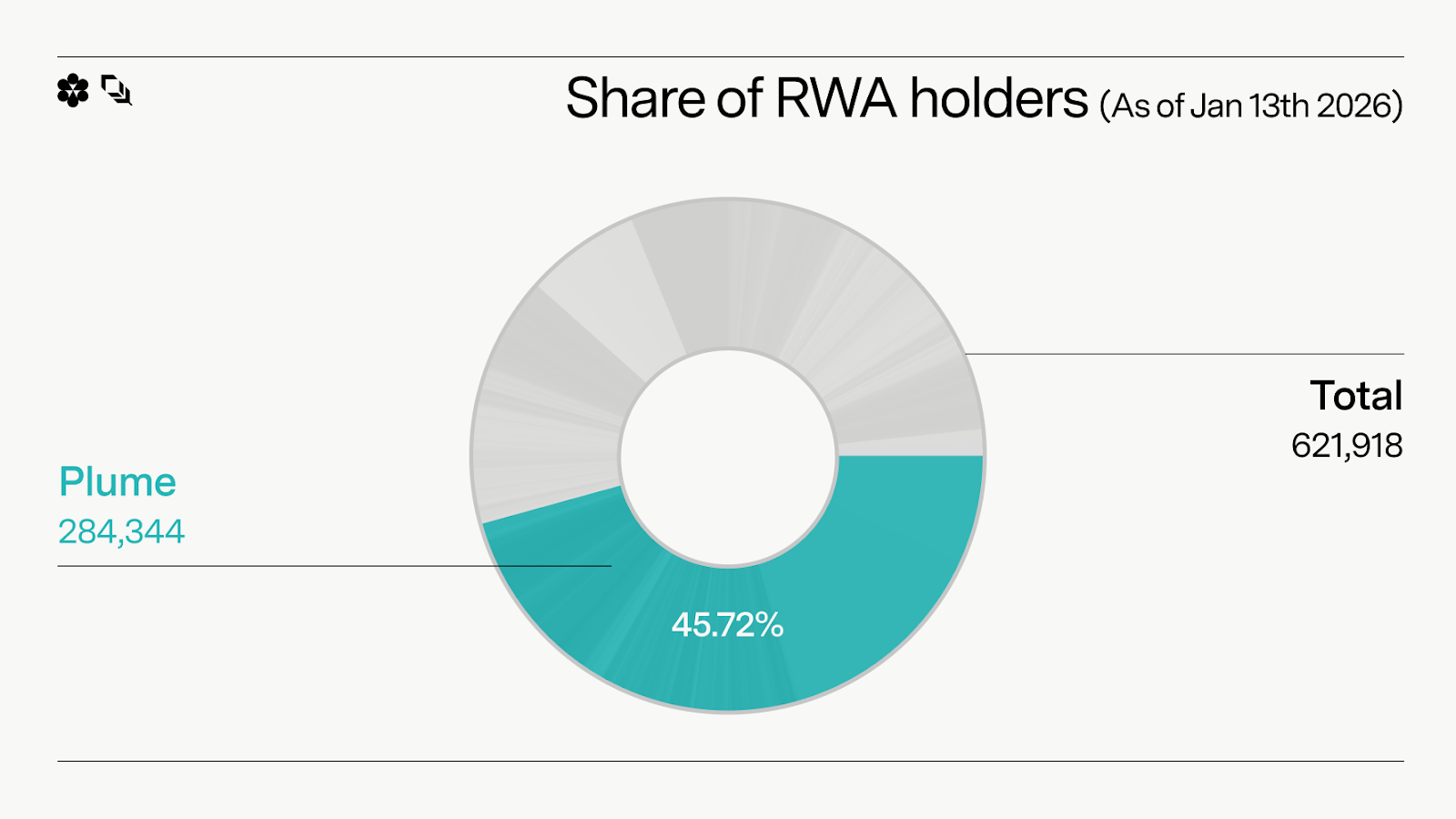
More notable than the growth rate is market concentration: Plume accounts for over 45% of all crypto RWA investors, meaning one out of every two individuals investing in real-world assets through crypto does so via Plume.
Plume proved RWAs can work at scale.
In a little over 6 months, they built the largest holder base, with predictable finality, inline AML screening, and asset-level controls that keep composability intact. Conduit powered the path from design to mainnet with Sequencer, RPC, Account Abstraction, and day-one partner integrations.
If you’re interested in building a chain, we’ll help you launch with the performance and operational confidence required for enterprise-grade infrastructure. From sequencer and RPC to account abstraction and partner integrations, Conduit gives you a unified foundation to scale.
Schedule a call with us, and we’ll map your requirements to a production-ready stack.